DigiSchool: The Shopify for Schools
DigiSchool brings a school's website, app, and daily operations into one platform, the same way Shopify simplified running an online store.
Simarpreet Singh
Blog Author
Before Shopify, launching an online store meant hiring developers, managing servers, and waiting months to sell a single product. Shopify changed that by bringing everything a store owner needed into one platform: no coding, no hosting to manage, just a dashboard and a store that worked.
Schools today face a similar gap. Most either don’t have a proper website, or paid a developer a large amount for one that hasn’t been updated since. Attendance is tracked on paper. Homework goes out over WhatsApp. Fees are collected by hand. None of it is connected, and none of it is visible to parents in one place.
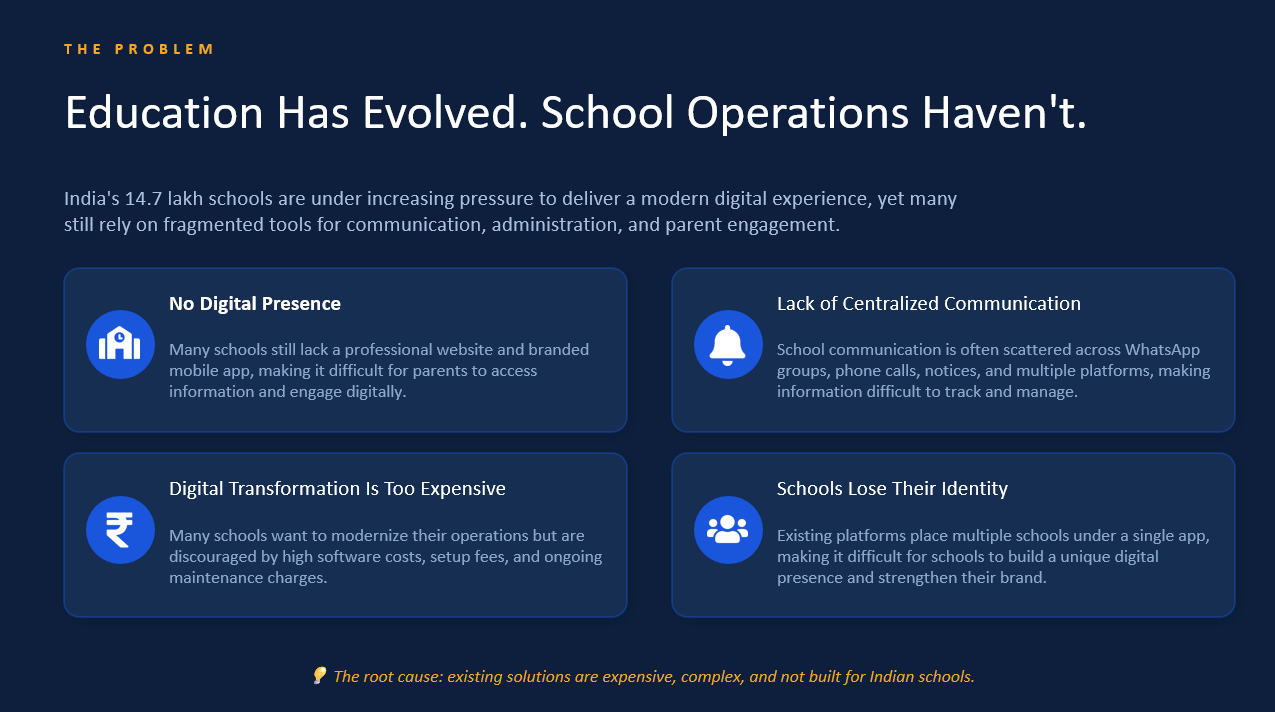
DigiSchool solves this the way Shopify solved it for online selling: one platform, everything included.
What DigiSchool includes
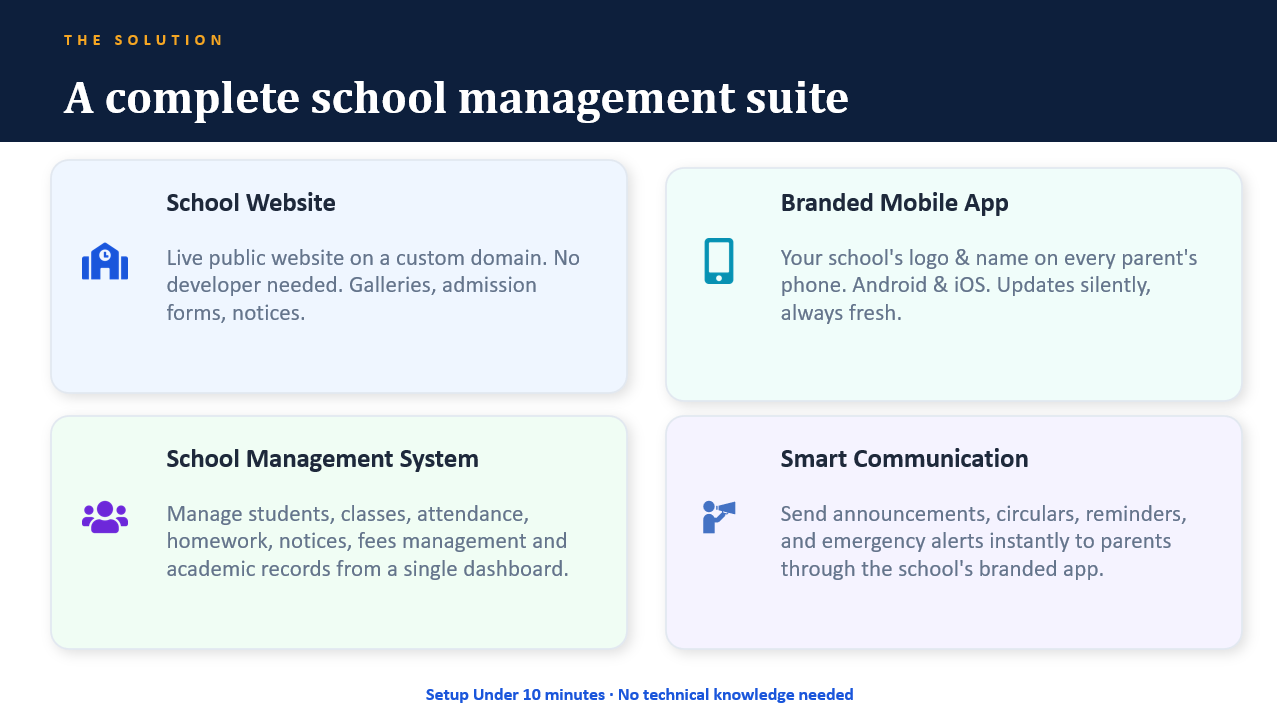
DigiSchool gives a school a website and a branded app, run from a single dashboard. Admins, teachers, and parents each get role-based access, so everyone sees exactly what they need to.
- Website and branded app: A school gets its own modern website and branded app, carrying the school’s unique identity with custom domain linking.
- Fees management & instant receipts: Parents view dues and pay fees in real time, with automatic digital receipts generated instantly.
- Online exam results: Teachers publish exam marks with student-level privacy; parents check results online anytime.
- Smart attendance & digital homework: Teachers track daily attendance and upload study materials/homework; parents receive same-day alerts.
- Notices, circulars & multi-channel alerts: Keep everyone informed via instant school-wide circulars with email and in-app notifications.
- Dedicated portals & self-service controls: Secure logins for students, teachers, and admins to manage daily operations without waiting on a vendor.
How DigiSchool compares
| Differentiator | DigiSchool | Traditional School ERP |
|---|---|---|
| Branded app | School-owned & custom domain supported | Often a shared ecosystem |
| Core offering | Website, app, fee manager, and ERP in one package | Usually separate modules |
| Website updates | Self-service | Often vendor-dependent |
| Setup | Live in days | Usually requires lengthy onboarding |
| Best suited for | Small, mid-sized, and growing schools | Primarily ERP-first, larger institutions |
| Pricing | Free tier available; paid plans from ₹799/month | High upfront implementation & maintenance costs |
| Focus | School branding & streamlined operations | Complex administration |
Generic website builders sit on the other side of this comparison. They can produce a functional website, but they stop there. There’s no attendance, no homework tracking, no fee collection, and no branded app. Schools that start with a website builder typically end up adopting a second, separate system to handle daily operations, which reintroduces the exact fragmentation DigiSchool is designed to remove.
Getting started
Setting up DigiSchool doesn’t require technical staff. The process, from submitting school details to going live with a working website and app, is covered step by step in an earlier post: How to set up your school’s website and app.
The bigger shift
Shopify didn’t just simplify software for merchants. It changed what a small business could expect from selling online, letting independent sellers compete with large retailers.
DigiSchool is bringing the same shift to schools. A small or mid-sized school can now offer parents the same level of digital experience as a large institution, without hiring developers or managing multiple disconnected tools.
Share this post
Like this post? Share it with your network!